

Lowkey, With Everything Happening in the World Right Now, I’m Going to Become a Pirate

Disclaimer: I have to start by saying that this is one of the most confusing topics I’ve ever researched, and that’s one of the reasons it took me so long to finish writing about it. If you start digging into piracy, you’ll quickly notice that two sources sitting right next to each other (websites or books) can give completely different information about the same event. The main reason is that there isn’t always clear, verified documentation; after all, piracy was an illegal activity, so accurate records were rarely kept. With that in mind, I did my best to piece things together as carefully as possible. Enjoy :)
Introduction
I’m finally posting this blog that I’ve been putting off for a very long time, mostly because of the overwhelming amount of information I collected while researching it. Originally, I planned to publish it on Halloween since it matched the pirate costume I wore then.

Yesterday, while watching a YouTube video by the travel vlogger Rahalista, the video happened to be filmed in Las Vegas. As he walked through different themed attractions along the Strip, he passed by the Treasure Island area. Seeing that immediately reminded me of this unfinished post, and since I’m staying home anyway because of everything going on in the world right now, I decided there really couldn’t be a better moment to finally finish it.
What originally sparked my interest in writing this post was the pirates exhibition that was recently held at the National Maritime Museum in Greenwich, London. By the time I finally got around to writing this, the exhibition had already closed—which I’m honestly still a little sad about (crying inside).

One thing about me that pretty much everyone knows is that the sea has always been, and will probably always remain, my number one fascination when it comes to the natural world. Another thing—something far fewer people know—is that if science and money didn’t matter, I would probably choose to work either legally at sea as a cruise ship attendant… or illegally as a pirate.
Ever since I was a child, reading novels like Treasure Island or watching movies such as the Pirates of the Caribbean series, I’ve always had this romanticized image of pirates and tended to place them on a bit of a pedestal. But while writing this post, I decided to look beyond the fantasy and explore the real lives of pirates: how accurate those stories actually are, and how much of the fiction is based on reality.
In this post, I’ll be exploring who pirates actually were and how piracy first emerged, giving a brief overview of the history of piracy, highlighting some of the most famous pirates, examining what their daily lives and ships were like, sharing some interesting facts, and finally looking at what modern piracy looks like today.
History of Piracy
Even though the so-called Golden Age of Piracy is what dominates popular culture—movies, books, art, and basically most of the pirate stories we grow up with—it actually represents a very short period in the overall history of piracy. One of the main reasons it gets so much attention is that it happens to be the most well-documented era. But piracy itself is far older. So the real question becomes: when did piracy actually begin, and what are the earliest traces of it?
First Traces of Piracy and Ancient Piracy
The First-Ever Pirates
The earliest known evidence of piracy in the Mediterranean appears in the Amarna Letters, a collection of diplomatic correspondence from the 14th century BCE exchanged between Egypt and various Near Eastern kingdoms.
In one of these letters, the Egyptian pharaoh Akhenaten accuses the king of Alasiya (modern-day Cyprus) of assisting pirates from the region of Lukka (in Asia Minor). According to Akhenaten, these pirates had been attacking and raiding Egyptian coastal cities.
The king of Alasiya denied any involvement and even pushed back against the accusation, pointing out that the same Lukka pirates had also raided his own coastal territories and ports.
The Lukka themselves controlled a loosely defined region in Asia Minor, often referred to as the Lukka Lands. Most of what historians know about them comes from Egyptian and Hittite records. They may have been Luwians, one of the earliest groups inhabiting Asia Minor (Anatolia), and they are very likely connected to the later Lycians, who were also frequently associated with piracy.

What we do know for certain is that piracy was a regular activity for them. At different times, they acted as both allies and enemies of the Hittites, and they were also one of the groups later identified as part of the coalition known as the Sea Peoples.
The Sea Peoples
The Sea Peoples were a confederation made up of several different groups who devastated the Mediterranean region roughly between 1276 BCE and 1178 BCE. Most of what we know about them comes from Egyptian inscriptions celebrating the pharaohs who defeated them: Ramesses II (The Great, r. 1279-1213 BCE), his son and successor Merenptah (r. 1213-1203 BCE), and Ramesses III (r. 1186-1155 BCE).
Egyptian records list several groups within this confederation, including the Akawasha, Denyen (Danuna), Lukka, Peleset, Dhardana, Shekelesh, Tjeker, Tursha (Teresh), and Weshesh. Ramesses II described how they appeared suddenly and in overwhelming numbers, writing that they came “all at once” and that “no land could stand before their arms,” claiming they spread destruction across lands “as far as the circuit of the earth.” Later inscriptions by Merenptah and Ramesses III also mention Libyans joining this coalition. (We were everywhere, even the OG pirates. I mean, yeah, criminals, but what can I say :P).

The Sea Peoples caused massive destruction across Anatolia, which at the time was under the control of the Hittite Empire, and their attacks contributed to the collapse of that empire. Evidence of their devastation also appears in a letter written by Ammurapi, the last king of Ugarit (r. 1215–1180 BCE), to the king of Alasiya. In the letter, Ammurapi describes how the Sea Peoples destroyed his kingdom, writing that “the enemy's ships came here and my cities were burned and they did evil things in my country.” Because of the scale of their raids and destruction, historians often describe the Sea Peoples as the first major pirates of the Mediterranean. However, their exact identity and origins remain one of the great historical mysteries.
What is clear is that they played a significant role in the Bronze Age Collapse, a period of widespread societal breakdown in the eastern Mediterranean. Their activities disrupted trade networks and contributed to an increase in piracy across the region. Although they were eventually defeated by Ramesses III in 1178 BCE, the Sea Peoples then disappeared from historical records. What likely happened is that some of them settled in coastal areas and established bases along places such as the southern coast of Cilicia, Crete, and other strategic locations. These bases would later become centers used by the generations of pirates that followed.
The Illyrians
One of the groups most famously associated with using piracy as an actual military strategy was the Illyrians, who lived in the Balkan Peninsula. In fact, it was the Illyrians who first developed the lembus, a type of fast and maneuverable ship that became widely used for pirate raids.

During the reign of Queen Teuta of the Ardiaei (231–227 BCE), piracy was practically encouraged among her people, so long as the targets were foreigners. Teuta’s pirates frequently interfered with Roman trade and interests, but Rome initially tolerated it. The situation only escalated when Teuta ordered the execution of a Roman envoy whom she considered disrespectful. That decision pushed Rome to act. The Roman consul Lucius Postumius Albinus (d. 216 BCE) led a fleet against her, and Teuta was eventually defeated during the First Illyrian War (229–228 BCE). According to legend, she took her own life in 227 BCE after the defeat.
Afterwards, Rome tried to stabilize the region by supporting Demetrius of Pharos (r. c. 222–214 BCE) as king of Illyria, especially since he had previously helped them defeat Teuta. However, once Roman attention shifted elsewhere, Demetrius rebuilt the Illyrian fleet and returned to piracy, which triggered the Second Illyrian War (220–219 BCE). Even after Demetrius died, piracy continued under his successors. It lasted all the way until the reign of Gentius (181–168 BCE), the final king of Illyria. Gentius eventually provoked the Third Illyrian War with Rome in 168 BCE, and after his defeat, Rome destroyed Illyria and ended its power as a pirate state.
Ancient Greek Pirates of Crete and Their Descendants: The Cilicians
After the Illyrians, some of the most active pirates in the ancient Mediterranean came from the ports of Cilicia and Crete. Although the Ancient Greeks are most often remembered for their contributions to philosophy, science, and the foundations of Western civilization, they also produced some of the most notorious pirates of the ancient world.

One of the earliest pirate strongholds was Crete, which was strategically positioned along the major sea routes connecting Greece with the eastern Mediterranean. Around the 10th century BCE, the final remnants of the Minoan civilization on the island were destroyed when Dorian Greeks raided the Cretan coast in search of slaves. After conquering the island, these invaders used Crete as a base for launching pirate raids across the Aegean Sea. However, if any place truly deserved the reputation of being the cradle of piracy in the ancient world, it was Cilicia Trachea. This region was a narrow coastal strip in Asia Minor (modern southeastern Turkey), squeezed between the Taurus Mountains and the Mediterranean Sea. Its geography made it the perfect pirate hideout. Ships traveling between Syria, Greece, and Italy had to pass nearby, meaning pirates could attack merchant vessels and retreat back to hidden coves and mountain shelters within hours. In many ways, it functioned as an ideal refuge for pirate exiles and raiders. Because of this, Aetolian pirates, who had been pushed out of the Aegean in the early 2nd century BCE, eventually settled in the region. Their arrival coincided with a critical moment: the Seleucid kings, who controlled Syria and parts of Asia Minor, had stopped conducting regular naval patrols along the Cilician coast. This lack of oversight allowed piracy in the region to grow rapidly.
As the Seleucid Empire, which ruled the coast of Cilicia, began steadily weakening after 110 BCE, the Cilician pirates grew even more powerful. Rome had technically taken control of Cilicia from the Seleucids earlier, in 190 BCE, but instead of directly governing the region, they allowed client kings to remain in power. Since piracy did not yet seriously affect Roman interests, the problem was largely ignored.
The situation worsened when King Mithridates VI of Pontus seized most of the Seleucid fleet. Mithridates preferred to cooperate with the pirates rather than align himself with Rome, and he even used them as allies. This arrangement allowed the Cilician pirates to expand their influence and operate with little interference.
Eventually, the issue became impossible for Rome to ignore. By 67 BCE, the Roman general Gnaeus Pompeius Magnus (Pompey the Great) was already campaigning in the region against Mithridates VI when he discovered that Mithridates had been using Cilician pirates to disrupt Roman military operations.

Today, Pompey is often remembered as the rival of Julius Caesar during the Roman Civil War, but long before Caesar crossed the Rubicon, Pompey was considered the “First Man in Rome,” the Republic’s most powerful general and one of its greatest defenders.
To deal with the piracy crisis, Pompey implemented a large-scale strategy. He divided the Mediterranean Sea into thirteen separate districts, assigning each one a fleet and a commander responsible for clearing pirates from that area. As each district was secured, through the capture or killing of pirates, the fleet from that district would move on to help clear the next. Using this systematic approach, Pompey gradually pushed the remaining Cilician pirates into a final stronghold near Coracesium in Cilicia, where he decisively defeated them in 67 BCE.
Piracy as We Know It
The Centuries Leading Up to the Golden Age
This section and the one that follows really form the core of what we usually imagine when we think about piracy. During this period, many pirates actually started out as privateers. A privateer was essentially the crew of an armed ship owned by private individuals but operating under a government commission, meaning they were officially authorized to attack enemy vessels during wartime.
In practice, this system became a convenient tool for European powers, especially the French, English, and Dutch, who used privateers to weaken Spain’s control over the New World. So technically these men were legal raiders working for the state… but the line between privateer and pirate was extremely thin (and often crossed). So is Spain lowkey the reason why we have the Golden Age piracy?... A thought.
During this period, piracy largely developed through two major groups:
1. The Barbary Corsairs

One major group was the Barbary Corsairs—the word corsair actually comes from the French term for privateer. These pirates operated primarily along the North African coast. By the 15th and 16th centuries, much of the North African coastline was firmly under Muslim control, and ports such as Algiers, Tunis, and Tripoli, along with many smaller coastal towns, became ideal bases for launching privateering raids. Their location along key Mediterranean trade routes made them perfect places to attack passing ships.
In theory, the rulers of the Barbary States (from Morocco to Libya) owed feudal loyalty to the Ottoman Sultan. However, because North Africa was geographically far from Constantinople (modern-day Istanbul), these regions operated with a significant degree of independence. As a result, local rulers often actively encouraged corsairs to use their ports as safe havens. In return, they expected a share of the profits taken from captured ships and goods.
2. The Dutch Privateers and the Dunkirkers

Another major pirate force appeared after Spain discovered the New World, particularly through the activities of Dutch privateers and a group known as the Dunkirkers. By 1604, the Dutch had already become a serious threat to Spain’s overseas empire. After three decades of warfare in the English Channel, Dutch privateers began organizing themselves into large fleets operating under the authority of the Dutch state.
This cooperation between private raiders and the government actually started earlier, during the Dutch revolt against Spanish rule in 1572. At that time, a loose alliance of Dutch pirates, smugglers, and privateers known as the Sea Beggars captured the port of Brielle (Brill). From there, they launched attacks against Spanish coastal shipping and used the port as a base of operations.
Spain responded by creating its own competing privateer force. In 1583, the Duke of Parma captured the port of Dunkirk, which had already gained a reputation as a haven for pirates and privateers. Parma then issued letters of marque, officially authorizing ships to attack enemy vessels.
Within just five years, these raiders—known as the Dunkirkers—had become such a serious nuisance to Dutch shipping that the Dutch began labeling them pirates rather than legitimate privateers.
Between 1621 and 1648, even after the war between Spain and the Dutch had ended, the Dunkirkers continued operating as pirates and were responsible for capturing over 200 Dutch ships every year. The Dutch eventually responded harshly. The Dutch States General issued orders that any captured Dunkirkers should be “beaten into the sea,” meaning they were to be thrown overboard.
Early Origins of the Golden Age of Piracy

What we now call the Golden Age of Piracy likely began around 1692, with the settlement of Tortuga. The island became closely associated with a group of hunters whose activities unintentionally helped shape pirate culture. These hunters prepared and preserved meat using a method learned from the Arawak, curing it over a wooden grill known as a boucan. Because of this technique, the hunters became known as boucanier, a word that later became anglicized into buccaneers.
In 1629, the Spanish attacked the French colony on St. Kitts, forcing around 200 refugees to flee. Many of them made their way to Tortuga, which had already gained a reputation as a relatively safe refuge. By this point, the buccaneers had long since established themselves on the island.
The community that formed there organized itself into three main groups: Habitans – the farmers, Boucaniers – the hunters, and Flibustiers – the pirates.
Together, these settlers created what became known as the Custom of the Coast, an unwritten code that governed how disputes were settled and how maritime expeditions were organized. This informal system eventually became the foundation for the pirate articles used later by pirate crews during the Golden Age, and many pirates continued to follow similar rules and customs throughout that era.
Port Royal and the Buccaneers
In 1654, Tortuga fell into disarray after the murder of its pirate dictator Jean le Vasseur. The island could no longer defend itself against a Spanish conquest, and the buccaneers were driven out and forced to search for a new base.
In 1655, an English expedition failed to capture Hispaniola but instead conquered Jamaica and made it an English colony. The English needed able men to defend the colony, hunt for provisions, and bring in wealth, so they invited the buccaneers to settle there.

Several things distinguished the buccaneers from other pirates. Though they always made legal pretensions, they were often illegal and operated during peacetime. They exclusively attacked the Spanish. Many of their operations were conducted by land, typically sailing to a location and attacking inland targets. Their activities were often tolerated because they had local popular support. If a port was threatened by a Spanish assault, a heavily armed pirate force could help defend it.
This era ended in 1671, when England and Spain signed a peace treaty. Attacking the Spanish became illegal. The word “buccaneer” gained a more dangerous connotation, and many preferred the title “privateer.”
Petit-Goâve and the Filibusters
Those who wished to continue buccaneering turned to Hispaniola, particularly the French colony of Saint-Domingue and the city of Petit-Goâve.
For the next seventeen years, this haven became the beating heart of New World piracy. Regardless of nationality, any captain could purchase a cheap commission from the governor and sign his name to become a legal privateer.
For English sailors, it was technically illegal to sail under a foreign commission, but few cared. The French distinguished the pirates from hunters by calling them flibustiers. In response to Anglo-French piracy, smuggling, and logwood cutting, the Spanish organized the Guarda Costa, a coast guard meant to suppress these activities.
Famous Buccaneers and Pirate Culture
This period of the Golden Age is especially interesting because it is one of the best documented. Individual buccaneers left extensive journals, describing their adventures and the places they visited. Many were explorers, navigators, and even natural scientists.
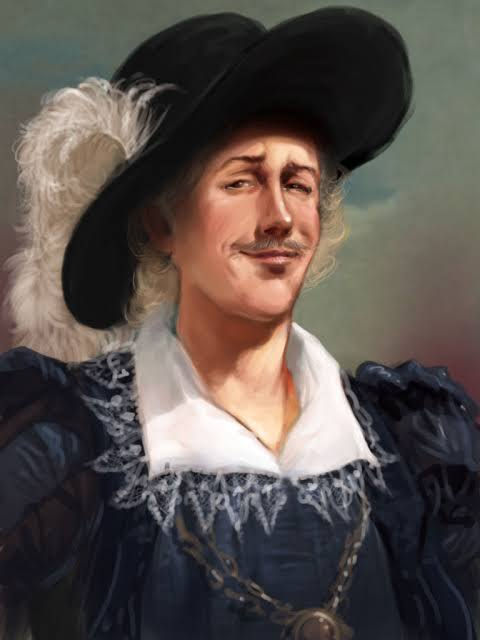
It also contains the highest concentration of truly epic individuals:
- Laurens de Graaf, who even had his own orchestra
- Bartholomew Sharp, the legendary gambler
- William Dampier, obsessed with coconuts
- Chevalier de Grammont, who commanded buccaneer cavalry
- Jean Hamlin, a reckless pirate who openly declared war on the entire world
During this period, pirates were also first documented using the skull and crossbones symbol. In 1688, French filibusters led by Francisco Franco in Mexico flew a red banner with a white skull and crossbones while attacking the Spanish.

The prominence of Petit-Goâve and the buccaneers defines this era. The date 1688 is often seen as a fitting endpoint. Petit-Goâve had already been attacked by the Guarda Costa in 1687 in retaliation for pirate activity. Then, in 1688, war broke out between England and France, ending the cooperation between the buccaneers and filibusters, who had spent decades fighting the Spanish together. Now the former allies were enemies.
The last true buccaneer attack is often considered the raid on Cartagena in 1697, where a French naval force was reinforced by filibusters. After the city was sacked, the navy sailed away with the loot without paying the filibusters, who returned and sacked the city again, even more brutally.
The Rise of Nassau

The era of piracy in the Bahamas began in 1696 when the privateer Henry Every brought his ship the Fancy, loaded with loot from plundering Indian Empire trade ships, into Nassau harbor, The Bahamas. Henry Every bribed the Governor of The Bahamas, Nicholas Trott, with gold, silver, and with the Fancy itself, which was still loaded with 50 tons of elephant tusks and 100 barrels of gunpowder. This established Nassau as a base where pirates could operate safely, although various governors regularly made a show of suppressing piracy.
The pirates became increasingly powerful, and the era of true pirate control occurred when a combined Franco-Spanish fleet attacked Nassau in 1703 and again in 1706. The island was effectively abandoned by many of its settlers and left without any English government presence.
The War of the Spanish Succession and Privateering
In 1700, a member of the French royal family became King of Spain, threatening a powerful union between the two kingdoms. This triggered the War of the Spanish Succession.

In 1702, Queen Anne issued a proclamation encouraging privateering to strengthen Britain's naval power. Privateers were civilian ships authorized through letters of marque to attack enemy commerce. This system was cheaper than building large fleets and allowed private ships to assist in naval warfare.
In 1713, England exited the war through the Peace of Utrecht, which made Great Britain the dominant maritime power of Europe.
However, the end of the war suddenly left thousands of sailors unemployed. Privateering contracts were worthless, ships were laid up, and sailors flooded the ports of England and the Americas looking for work. Merchant captains cut wages drastically, sometimes over 50%, leaving sailors earning only 22–28 shillings per month. At the same time, Spanish Guardas Costas aggressively targeted English shipping in the Caribbean. Even a minor suspicion of smuggling could result in ships being seized and crews imprisoned in Cuban prisons. Within two years of peace, 38 Jamaican trading vessels were seized, costing owners nearly £76,000. The Caribbean had become more dangerous in peacetime than in war, and frustrated sailors filled the taverns and boarding houses of Port Royal, Jamaica.
Fed up with Spanish harassment and British neglect, many sailors and former privateers turned to piracy. One of the first was Benjamin Hornigold, who brought along Edward Teach (Blackbeard). By the summer of 1713, they and their companions decided to resume attacking Spanish ships. This time for themselves.
The Republic of Pirates

In 1713, former privateer Benjamin Hornigold established Nassau on New Providence as a pirate base, using it to stage small-scale attacks on Spanish shipping and plantations. It wasn't until 1715 that Nassau would blossom and begin the "true" Golden Age of Piracy. By 1715, more than 2,000 ex-privateers had gathered on the island, calling their anarchic society the “Republic of Pirates.”
In 1715, a Spanish Treasure Fleet wrecked off the coast of Florida. Pirates rushed to the wreck sites, diving for treasure or robbing Spanish salvage operations. The Governor of Jamaica secretly sent a privateer fleet led by Commodore Henry Jennings to protect the salvors, while secretly planning to steal the treasure themselves. When the conspiracy was discovered, the governor was arrested, and Jennings fled to Nassau, increasing its pirate population. By this time, Nassau had around 1,000 inhabitants, including pirates, tradesmen, smugglers, and prostitutes.
The “Republic” was dominated by two famous pirates who were bitter rivals – Benjamin Hornigold and Henry Jennings. Hornigold was mentor to pirates such as the infamous Edward Teach, known as “Blackbeard”, along with Sam Bellamy and Stede Bonnet. Jennings was mentor to Charles Vane, “Calico” Jack Rackham, Anne Bonny, and Mary Read.
Despite their rivalries, the pirates formed themselves into the “Flying Gang” and quickly became infamous for their exploits. The Governor of Bermuda stated that there were over 1,000 pirates in Nassau at that time and that they greatly outnumbered the 100 inhabitants of the city. Blackbeard was later voted by the pirates of Nassau to be their “Magistrate” and to be in command of their “Republic” and enforce law and order as he saw fit.
The pirates of Nassau often referred to themselves collectively as the Flying Gang, but they preferred the title privateers, or sometimes Marooners, because marooning was a common punishment they inflicted on criminals. The Marooners could be distinguished from earlier pirates by their dictatorial behavior. Many of the Captains assumed strict authority, and they deployed cruller methods to preserve internal discipline, such as torture and psychological punishment. The Marooners were seemingly also the first English pirates to use the black flag.
The Fall of the Pirate Republic & The End of the Golden Age
Initially, Nassau pirates avoided attacking British ships. Over time, this restraint disappeared, and pirates began seriously damaging British trade. As a result, King George I appointed Woodes Rogers as Governor of the Bahamas to destroy the pirate republic. In 1718, Rogers arrived in Nassau with seven ships and a royal pardon for any pirate willing to surrender.

Among those who accepted this offer was Benjamin Hornigold, and, in a shrewd move, Rogers commissioned Hornigold to hunt down and capture those pirates who refused to surrender and accept the royal pardon. Hornigold took ten pirates prisoners, and nine of them were executed on the morning of 12th December 1718. This act re-established British control and ended the Republic of Pirates in the Bahamas. Nassau was taken by the British without a fight, and prominent pirates like Charles Vane, Stede Bonnet, and Blackbeard were hunted down and killed.
As the years progressed, fewer pirates started appearing. The last great marooner was Edward Low, who disappeared in 1724. By 1730, the Golden Age of Piracy was effectively over. That same year, Olivier Levasseur, one of the period's most iconic names, was executed to demonstrate that law and order had returned.
Important Pirates
Much of what we think we know about pirates and even some of the myths that surround them come from a book titled A General History of the Pyrates, first published in 1724. The author is listed as Captain Charles Johnson, but the true identity behind that name remains a mystery. Today, many historians believe the book may actually have been written by Nathaniel Mist, a newspaper publisher who had gotten himself into legal trouble and needed money to settle his debts. To do that, he may have gathered together stories circulating at the time about pirates and turned them into a book.
The result was essentially the first major collection of pirate biographies, filled with stories about their lives, their exploits, and even illustrations showing what they might have looked like.
Pirate crews themselves were surprisingly diverse. Men from many different backgrounds and nationalities ended up sailing together. Among their ranks were escaped slaves, men rejected or disgraced by mainstream society, former privateers who had lost their commissions, impoverished sailors, and sometimes even men with prior military experience.
Since I personally enjoy people with strong personas, it only makes sense to take a look at some of the most famous pirates in history, many of whom had exactly that.
Blackbeard: Edward Teach

If you ask someone to name a historical pirate, chances are the first name that comes to mind is Blackbeard. Even though his career as a pirate lasted only about two years before he was killed by the Royal Navy, his dramatic personality and terrifying image helped cement his reputation in history.
Blackbeard, whose real name was Edward Teach, was known for both his willingness to fight and his ability to intimidate. He carried pistols, swords, and grappling hooks, and he wasn’t afraid to use them, but he often preferred a different strategy: psychological warfare. Teach understood that intimidation could be just as effective as violence. To achieve this, he styled his long black beard into braids tied with ribbons, and he placed slow-burning fuses within them. When preparing for battle, he would light the fuses so that smoke surrounded his face, giving him an almost supernatural, demonic appearance. The effect was terrifying. Many captains and their crews wanted nothing to do with what looked like a smoke-covered demon from hell commanding a pirate ship, and in many cases, they surrendered without even attempting to fight.
Teach originally began his career as a privateer, but he reportedly turned fully to piracy under the influence of Captain Benjamin Hornigold. Hornigold had already been operating as a pirate since 1713 and played a major role in establishing the Republic of Pirates in the Bahamas. Teach quickly proved himself capable and rose through the ranks. Around 1716, Hornigold trusted him enough to place him in command of a captured ship with his own small crew, officially making him a pirate captain.
One of Blackbeard’s most famous captures was the ship that would become Queen Anne’s Revenge. On November 28, 1717, he and his crew seized a 200-ton French slave ship named La Concorde near the island of Martinique. Teach renamed the vessel Queen Anne’s Revenge, partly as a political insult directed at King George I, whom he strongly disliked. With this ship, Blackbeard launched a series of raids across the West Indies, terrorizing ships and settlements throughout the region during his campaign of piracy.
The Only One That Got Away: Henry Avery

The most profitable act of piracy in history is widely believed to be Henry Avery’s capture of the Ganj-i-Sawai in 1695, a massive treasure ship belonging to the Mughal Emperor of India. Because of this extraordinary raid, Avery earned the title “King of Pirates,” and his story quickly became surrounded by myths and legends.

The attack took place during the annual 25-ship Mughal convoy that sailed toward Mecca for pilgrimage. Among the ships were the heavily loaded treasure vessel Ganj-i-Sawai, a large Ghanjah dhow, and its escort ship Fateh Muhammed. On 7 September 1695, Avery joined forces with several pirate ships and commanded a small pirate squadron during the attack. The pirates managed to seize an enormous amount of wealth: up to £600,000 in precious metals and jewels, which would be worth roughly £115.3 million in 2026. The incident created a serious diplomatic crisis, severely damaging England’s already fragile relationship with the Mughal Empire.
In response, both the Privy Council and the East India Company offered a combined £1,000 reward for Avery’s capture; an enormous amount of money at the time. The scale of the pursuit is often considered the first worldwide manhunt in recorded history. Meanwhile, Avery sailed toward the Bahamas, where he later helped establish Nassau as a pirate haven. As the international search for him intensified, his crew scattered across the world, with some settling in America, while others eventually returned to England.
Avery became infamous for one very unusual reason: he was one of the very few major pirate captains who managed to disappear with his loot without ever being captured or killed in battle.
The Gentleman Pirate: Stede Bonnet

Not every pirate was particularly skilled at piracy. One of the most unusual cases was Stede Bonnet, often called the “Gentleman Pirate.”
Bonnet came from a respectable English family and owned a successful sugar plantation in Barbados. By all accounts, he lived a comfortable life and was considered a gentleman by the island’s society. However, he eventually decided to abandon that life and take up piracy, apparently in an attempt to escape an unhappy marriage. Bonnet converted his sugar trading vessel into a pirate ship, naming it Revenge, and sailed off to join the pirates operating out of Nassau.
Eventually, Bonnet crossed paths with Blackbeard. Recognizing Bonnet’s lack of experience at sea, Blackbeard essentially took over command of Revenge himself. He told Bonnet that since he was not used to “the fatigues and care of such a post,” he should instead come aboard Blackbeard’s ship and “live easy and at his pleasure.” (There’s a myth that maybe started with the show Our Flag Means Death about the two being associated romantically.)
The Women Pirates: Anne Bonny and Mary Read
Two of the most famous women in pirate history were Anne Bonny (who disappeared after 28 November 1720) and Mary Read (who died in April 1721). Both were well documented during their lifetimes and continued to appear frequently in historical accounts afterward. They are especially remembered for managing to escape execution, which was the usual fate for captured pirates. Anne and Mary managed this by playing a card that their male counterparts could not: they both claimed to be pregnant. Since English law prohibited the execution of pregnant women, this temporarily spared them from hanging.
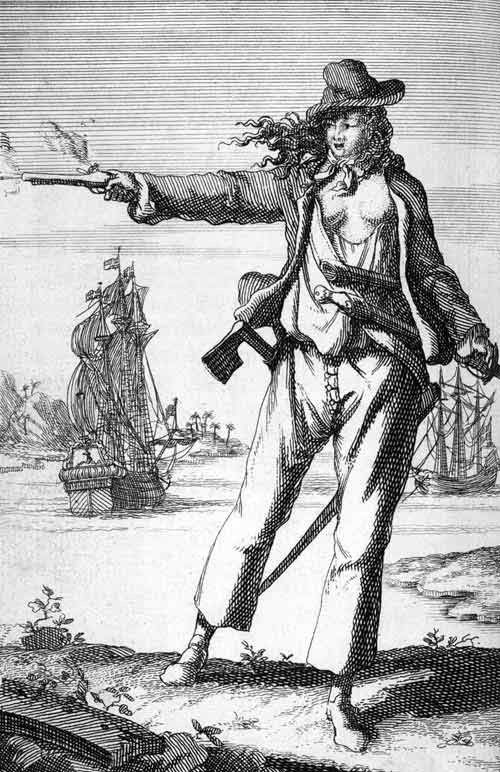
Anne Bonny was born around 1697 in Cork, Ireland, to a lawyer and his servant, who was not his wife. Because of the scandal surrounding her illegitimate birth, Anne’s father eventually moved his new family to Charleston. When his wife discovered the situation, she immediately cut off financial support. After Anne’s mother died when she was twelve, Anne became known for her rebellious and violent behavior. This wasn’t the typical teenage rebellion; stories claim she once stabbed a kitchen servant during an argument about how to peel potatoes. At sixteen, Anne married a sailor named James Bonny. Her father strongly disapproved of the marriage and disowned her. Anne then ran away with her husband to the Bahamas, where she soon entered a life of piracy and plunder. In Nassau, Anne met the pirate captain John “Calico Jack” Rackham. The two began a relationship, and Anne eventually left her husband to join Rackham’s pirate crew. During their travels, Rackham’s crew encountered Mary Read, who had originally been aboard a ship captured by pirates. After the attack, she ended up joining Rackham’s crew. Anne and Mary quickly became close companions, much to Rackham’s jealousy, since he initially believed Mary was a man.

Mary Read is remembered both for her career as a fierce pirate and for the fact that she spent much of her life disguised as a man. She was born in England toward the end of the 17th century as the illegitimate daughter of a young widow. Before Mary was born, her mother had been receiving financial support from her in-laws for her legitimate son. After that boy died, Mary’s mother dressed Mary as her half-brother so she could continue receiving the payments and conceal Mary’s illegitimacy. This disguise continued to shape Mary’s life. At thirteen, she began working as a footman to support herself and her mother. Unsatisfied with that life, she eventually joined the British military. Later, she boarded a ship sailing for the West Indies, beginning her life at sea. The ship had not traveled very far before it was captured by English pirates, who forced Mary to join their crew. From that moment on, Mary entered the world of piracy.
Anne Bonny and Mary Read eventually fought side by side as pirates. Anne in particular had little patience for cowardice. This became clear when British forces surprised Rackham’s crew during the night. Most of the men hid below deck, getting drunk on rum rather than fighting. Only Anne Bonny and Mary Read remained on deck to resist the attackers. They fought as long as they could, shouting down to the men hiding below and urging them to come up and fight. Eventually, however, they were overwhelmed, captured, and taken to Jamaica, where they were imprisoned. Calico Jack Rackham was tried first and sentenced to hang. When Anne visited him in prison before his execution, she reportedly delivered one of the coldest breakup lines in history:
“If you had fought like a man, you need not have been hanged like a dog.”
The Psychopath: Edward Low

Captain Edward (Ned) Low, who was born in Westminster, gained a reputation as one of the most brutal pirate captains ever to sail the seas. During the 1720s, he plundered ships across both sides of the Atlantic Ocean, becoming infamous for his extreme cruelty.
Low seemed to take a disturbing pleasure in tormenting his victims. He was known for cutting off the noses, ears, and lips of captured sailors, and his treatment of prisoners was notoriously savage. Interestingly, he reportedly had a rule against harming women, and he was said to miss his daughter deeply. Still, despite that contradiction, it became increasingly clear that the captain’s behavior was bordering on psychopathic.
Low became widely known throughout the Caribbean, which was already a major pirate hotspot during the Golden Age of Piracy. His notoriety largely came from the horrific punishments he inflicted on captured men, which included mutilation and even burning prisoners alive.
Unlike some pirates who might simply force prisoners to walk the plank, Low often chose far more brutal methods. One of the most disturbing stories about him describes how he cut off a rival captain’s lips, cooked them, and forced the man to eat them. When he burned ships, he no longer needed, he would tie them to the vessel and burn it with them still aboard.
The Richest Pirate: Sam Bellamy

Among the many pirates who sailed under the Jolly Roger, one figure quickly rose above the rest in terms of wealth: Captain Samuel Bellamy. Known as “Black Sam” or “Black Bellamy,” he became the richest pirate in history in a remarkably short time. Over the course of just two years, Bellamy and his crew captured 53 ships, building a reputation that gave them control over large areas of the sea.
Bellamy originally joined the crew of Captain Benjamin Hornigold, sailing aboard the ship Marianne. Hornigold’s second-in-command at the time was Edward “Blackbeard” Teach. After eventually becoming one of Hornigold’s lieutenants, Bellamy disagreed with the captain’s decision not to attack ships flying the British flag. With the support of his friend and quartermaster Paulsgrave Williams, Bellamy helped lead a mutiny. During this uprising, both Hornigold and Blackbeard were voted out of command, and Bellamy took control of Marianne.
One notable figure who sailed under Bellamy’s command was John King, believed to have been between eight and eleven years old when he died on April 26, 1717, making him the youngest pirate in recorded history.
Bellamy himself was known for being relatively democratic and well-mannered compared to many other pirate captains. He was famous for treating both his crew and hostages with unusual kindness. Because of this reputation, he was sometimes called the “Prince of Pirates,” and he liked to see himself as something of a Robin Hood–like figure.
The Flail of the Spaniards: François l’Olonnais

Unlike many other pirates of his time, François l’Olonnais began life in extreme poverty. His difficult circumstances eventually pushed him into indentured servitude, which brought him to the Caribbean sometime during the mid-17th century. After years of labor, he eventually managed to complete his service and gain his freedom while still relatively young. Restless and ambitious, he soon turned to piracy.
For long periods, l’Olonnais waited along the coast for Spanish ships leaving mainland Mexico, hoping to ambush them. This strategy nearly ended his career when a violent storm wrecked his ship along the Mexican coast. Spanish soldiers attacked the stranded crew and killed everyone except l’Olonnais, who survived only because he pretended to be dead. Watching his entire crew slaughtered left him with an intense hatred of the Spanish. From that moment on, he showed them no mercy whatsoever, which earned him the nickname “The Flail of the Spaniards.” After escaping, he returned with a larger pirate crew numbering several hundred men. Together, they captured and looted numerous Spanish ships. However, ships were not always their main targets. Under l’Olonnais’s leadership, the pirates attacked and captured the Venezuelan city of Maracaibo, where they remained for two months, plundering the city and doing as they pleased during their occupation.
The Chinese Pirate Queen: Cheng I Sao

Now imagine combining all the ships and crews of the pirate captains mentioned so far, and even then, you still wouldn’t come close to the power commanded by Cheng I Sao.
At the peak of her power, this former prostitute turned pirate leader controlled more than 1,500 ships and commanded around 80,000 sailors, creating one of the largest naval forces in history.
Cheng I Sao used this massive fleet to raid ships, tax coastal towns, and plunder trade routes across the South China Sea. Her influence and military strength made her one of the most powerful pirate leaders the world has ever seen.
There are, of course, many other pirates worth exploring, but there simply isn’t enough space to include them all here. Some notable names include Charles Vane, Captain William Kidd (often described as the most unfortunate and one of the oldest pirates), Benjamin Hornigold, Captain Henry Morgan (whose name is now famously associated with spiced rum), Olivier Levasseur, Montbars the Exterminator, and Bartholomew Roberts, often referred to as the last pirate.
The Reality of Being a Pirate
Daily Lives of Pirates
Pirates lived hard, uncertain lives that mixed freedom with danger, rough equality with cruelty, and excitement with constant hunger. This is one reason people often romanticize them. They seem to represent adventure, rebellion, and life outside the control of governments and wealthy empires. Pirate crews sometimes followed written codes, elected their captains, and gave men an equal vote in important decisions. Compared with the strict hierarchies of their time, this can make pirate life seem bold and almost democratic. Yet pirates were also violent criminals who survived by stealing, threatening, and attacking others.

In everyday life, pirates followed many of the same habits as other people of the late seventeenth and early eighteenth centuries. They usually worked from sunrise to sunset, ate two meals a day, and often smoked tobacco. At sea, they slept in hammocks, ate in small groups, shared whatever rations were available, and worked constantly to sail and maintain their ships. Pirate ships were often crowded, because crews wanted enough men to overpower other vessels. This made food, water, and space even more limited. Pirates could not stay at sea for long without their supplies spoiling, so they usually hunted for prizes for a short time and then retreated to hidden anchorages to rest and repair.
Food

Food was one of the biggest problems in pirate life. Unlike naval ships, pirates had no steady supply system, so hunger was always a threat. They often stole provisions from merchant ships and coastal settlements. Their diet depended on what they could seize or find: beef, pork, turtle, corn, yams, sweet potatoes, bananas, and cassava were common foods in the Caribbean world they moved through. Pirates often preferred fresh meat because salted food spoiled and lacked nutrition. They also made communal dishes such as salmagundi, a heavily seasoned mixture of chopped meat, vegetables, pickled foods, and spices shared from a common pot. This kind of meal reflected pirate life itself: improvised, communal, and dependent on whatever could be gathered.
Drink

Drinking was another major part of pirate culture. Water was difficult to keep fresh, especially in tropical climates, so people often drank alcohol mixed with other liquids. Pirates were strongly associated with rum, punch, and other strong drinks, and historical accounts show that many crews drank heavily when they reached port or made camp on shore. Taverns and punch houses in Caribbean ports were important social centers where sailors, traders, and pirates all gathered. At the same time, pirates could not afford drunkenness while sailing, because operating a wooden ship required constant skill and discipline. Even pirate crews had to obey orders at sea, or they risked wrecking the ship and losing their lives.
Important Elements
Flags

When people think about pirates, one of the most recognizable symbols that comes to mind is the Jolly Roger, the famous pirate flag. It has become one of the most iconic images associated with piracy, but many people wonder what these pirate flags actually meant.
Pirate flags often used symbols meant to intimidate their enemies and communicate a warning before battle. Many of these symbols carried specific meanings:
Red Pirate Flag | A warning that no mercy would be shown |
Skull and Bones | Death |
Bleeding Heart | A slow, painful death awaits |
Edward Low’s Red Skeleton | Torment followed by death |
Hourglass | Time is running out |
Nude Pirate | Pirates without shame |
Clothed Pirate | Often represented the pirate captain |
Raised Drinking Glass | A toast to death or even to Satan |
Horned Skeleton | Satan |
Weapons | A battle is about to begin |

In the book A General History of the Pyrates, the author Johnson specifically mentions two pirates who referred to their flags as “Jolly Roger”: Bartholomew Roberts in June 1721 and Francis Spriggs in December 1723. Interestingly, although both pirates used the same name for their flag, their designs looked completely different. This suggests that “Jolly Roger” was already being used as a general term for black pirate flags, rather than referring to one specific design. In fact, neither Spriggs’s nor Roberts’s version of the Jolly Roger actually featured the classic skull-and-crossbones symbol we usually associate with pirate flags today.
The Two Most Famous Pirate Ships
Pirates used many different types of ships, but two vessels became particularly associated with piracy.

Sloop – The sloop was the most commonly used pirate vessel and was especially well suited to the waters of the Caribbean. Both Bermuda and Jamaica were major centers where these vessels were built. Although technically not classified as a “ship,” sloops were often called ships anyway. They were single-masted sailing boats with fore-and-aft rigging, sometimes equipped with a short bowsprit and a single headsail attached to the forestay. Depending on their size, they could carry anywhere from two to twenty light cannons. Pirates favored sloops because of their shallow draft and high maneuverability, which made them perfect for navigating shallow coastal waters and escaping larger naval ships.
Spanish Treasure Galleon – The Spanish treasure galleon was a very different kind of vessel. These ships were large, three-masted sailing ships with square rigging and usually two or more decks. They were widely used between the 15th and 17th centuries and were built by Spain for both trade and military purposes. While most pirates preferred the speed and agility of sloops, another group known as the South Sea Men often preferred large, full-rigged ships that could carry heavy cargo and artillery. These ships usually had a displacement between 150 and 500 tons burthen. Capturing one of these large vessels was often the ultimate goal for many pirates. Once seized, pirates would modify them to better suit their needs. They would remove internal partitions and trim down upper structures to reduce weight and increase speed. They also added extra gunports, cannons, and swivel guns, and sometimes even adjusted the rigging to improve performance. These powerful pirate flagships were often referred to as “Men-of-War.” Some had originally been built as privateers, such as Henry Avery’s famous ship, Fancy.
Progressiveness in Piracy
Pirate Codes and Democracy
After a pirate crew elected its officers, they usually established a set of rules that governed life aboard the ship. These rules were known as pirate codes or articles.
Pirate codes have become a central element of pirate legends and fiction, often portrayed as strict laws that everyone had to follow. In reality, they were probably closer to guidelines that helped shipmates live and work together while sharing the risks and rewards of piracy.
One of the most detailed surviving examples of pirate articles was written in 1721 by Bartholomew Roberts and his crew, giving historians a rare look into how pirate societies organized themselves.

Women in Piracy
Although the vast majority of pirates throughout history were men, historians have identified roughly one hundred known female pirates, with about four of them active during the Golden Age of Piracy.
Some of these women rose to significant positions of power, even becoming pirate captains or leading entire fleets. Among the most powerful were Zheng Yi Sao (1775–1844) and Huang Bamei (1906–1982), both of whom commanded tens of thousands of pirates.
As discussed earlier, the story of Anne Bonny and Mary Read remains one of the most famous examples of defiance during the Golden Age. By openly challenging the social expectations of their time, they came to symbolize the rebellious spirit often associated with piracy.
In the past two decades, historians have increasingly explored the social history of piracy, which many consider one of the most innovative and progressive areas of pirate studies.
Matelotage
Another interesting social practice among pirates was something called matelotage. This was a formal partnership that existed among Caribbean buccaneers and sailors during the 17th and 18th centuries. The word comes from French and literally means “seamanship” or “bunkmate.”
Matelotage functioned somewhat like a civil union. Two partners would share income, property, and risks, and if one of them died, the other would inherit their possessions. These partnerships provided sailors with emotional, physical, and economic support, which was especially important given the dangerous and uncertain life at sea. Historians still debate whether these relationships were purely practical and platonic or whether some were romantic or sexual in nature.
One surviving example of a matelotage agreement was written between Francis Hood and John Beavis at Fort Dauphin in Madagascar. The document states that “what gold, silver, or any other thing” belonged to the surviving partner if the other died at sea.
Modern Piracy
Piracy is not just something that belongs to the past or to romantic stories about the Golden Age. It still exists today, and in many cases it remains a serious and dangerous crime where the victims do not always survive. Modern pirates often use guns, fast boats, and organized criminal networks to attack ships, and in some cases even massive cargo vessels and oil tankers have been targeted.

For example, in April 2007, the International Chamber of Commerce (ICC) issued a warning about a sharp increase in pirate attacks off the coast of Somalia, particularly near Mogadishu, where ships carrying cargo for Somali ports were frequently being hijacked. Ships traveling through the region were advised to avoid those waters entirely whenever possible.
Over the past two decades, organizations like the ICC have monitored piracy incidents and identified several major piracy hotspots around the world. These include waters near Indonesia, Somalia, India, Sri Lanka, Bangladesh, Myanmar (Burma), West Africa—especially Nigeria—the Philippines, Brazil, Colombia, and Venezuela. These regions continue to be considered high-risk areas for maritime attacks. More broadly, modern piracy has been recorded in a number of strategic maritime zones such as the Gulf of Guinea, the Gulf of Aden near Somalia, the Strait of Malacca in Southeast Asia, the Arabian Sea, the Indian Ocean, and the Bay of Bengal.
Even though international naval patrols and cooperation between governments have reduced piracy in some areas, the problem has not disappeared. Instead, it tends to shift from one region to another, often appearing in places where governments are weak or political instability is high. A clear example of this is the Somali coast, where piracy grew during the Somali civil conflict and where pirates frequently hijacked ships and demanded large ransoms for both cargo and crew members.
In the end, pirate life was not simply glamorous or evil. It was a harsh way of living shaped by danger, scarcity, and constant movement between sea and shore. Pirates did enjoy freedom from many of the rules of ordinary society, and their ships sometimes offered a rare sense of shared power among common sailors. But that freedom depended on robbing others and surviving by force. This is why pirates continue to fascinate people: they lived adventurous and rebellious lives, yet those lives were also brutal, unstable, and deeply tied to violence.
Resources
Books:
- Daily Life of Pirates by David Marley
- Pirates: The Complete History From 1300 Bc To The Present Day by Angus Konstam (Fav)
- The Republic of Pirates: Being the True and Surprising Story of the Caribbean Pirates and the Man Who Brought Them Down by Colin Woodard
YouTube videos:
Articles/ websites:
Papers
- “Relationships Men and Matelotage: Sexuality and Same-Sex Relationships within Homosocial Structures in the Golden Age of Piracy,1640-1720” by Nicole Keegan
KM, till next time <3


Comments